All Categories
Featured
Table of Contents
Gordon White & Robert Wade, 1988. "," Palgrave Macmillan Books, in: Gordon White (ed.), Developmental States in East Asia, chapter 1, pages 1-29, Palgrave Macmillan. International Monetary Fund, 2012. "," IMF Personnel Nation Reports 2012/271, International Monetary Fund. Farouk El-Kharouf & Sulayman Al-Qudsi & Shifa Obeid, 2010. "," Asian Economic Documents, MIT Press, vol.
(consisting of those not matched with items on IDEAS) These are the items that most often mention the same works as this one and are mentioned by the exact same works as this one. Jieming Zhu & Yan Guo, 2014. "," Urban Studies, Urban Research Journal Limited, vol. 51( 6 ), pages 1120-1145, May.

"," Environment and Planning C,, vol. 16( 1 ), pages 69-84, February. Jieming Zhu, 2013. "," Environment and Planning C,, vol. 31( 2 ), pages 257-275, April. Amar, J. & Lecourt, C. & Carpantier, J.F., 2022. "," Journal of International Financial Markets, Institutions and Money, Elsevier, vol. 77(C). Jieming Zhu & Loo-Lee Sim & Xuan Liu, 2007.
Key Factors Shaping GCC Economic Outlooks for 2026
39( 10 ), pages 2346-2365, October. 4( 4 ), pages 476-495, December. 41( 7 ), pages 1629-1646, July.

52( 15 ), pages 2822-2848, November. 15( 3 ), pages 295-321, October. 29( 1 ), pages 23-37, January.
The Cost of Non-Compliance: Navigating New ESG LawsZuzana Brixiova & Balzs gert & Thouraya Hadj Amor Essid, 2013. "," Working Paper Series 991, African Development Bank. Ricker-Gilbert, Jacob & Mason, Nicole M. & Darko, Francis & Jayne, Thomas S. & Tembo, Solomon, 2013. "," Food Security Collaborative Working Papers 154938, Michigan State University, Department of Agricultural, Food, and Resource Economics.
Building Resilient Investment Structures with Arabian Assets
"," Urban Research, Urban Research Journal Limited, vol. 42( 8 ), pages 1369-1390, July. Nir Kshetri, 2023. "," Financial Development, Springer; Southwestern University of Financing and Economics, vol. 9( 1 ), pages 1-38, December. Corneo Giacomo, 2011. "," Review of Middle East Economics and Financing, De Gruyter, vol. 7( 1 ), pages 1-19, May. M Douglass, 1994.
26( 4 ), pages 543-566, April. Maximilian Benner, 2019. "," Economies, MDPI, vol. 7( 2 ), pages 1-22, May. All product on this website has actually been provided by the respective publishers and authors. You can help correct mistakes and omissions. When requesting a correction, please discuss this product's deal with: RePEc: ehl: lserod:55252. See general info about how to correct material in RePEc.
It also permits you to accept possible citations to this product that we are unpredictable about. If you know of missing products mentioning this one, you can help us developing those links by adding the pertinent referrals in the exact same way as above, for each refering product.
Creating Resilient Investment Portfolios with GCC Assets
For technical questions concerning this item, or to fix its authors, title, abstract, bibliographic or download details, contact: LSERO Manager (email available listed below). General contact information of provider: . Please note that corrections may take a number of weeks to filter through the various RePEc services.
Economic diversification is the process of transitioning an economy away from reliance on a single sector or income to numerous sectors and markets. This type of economic shift is presently underway in the Gulf Cooperation Council (GCC) region, where Bahrain, Kuwait, Oman, Qatar, Saudi Arabia and the United Arab Emirates are experiencing fast socio-economic improvement.
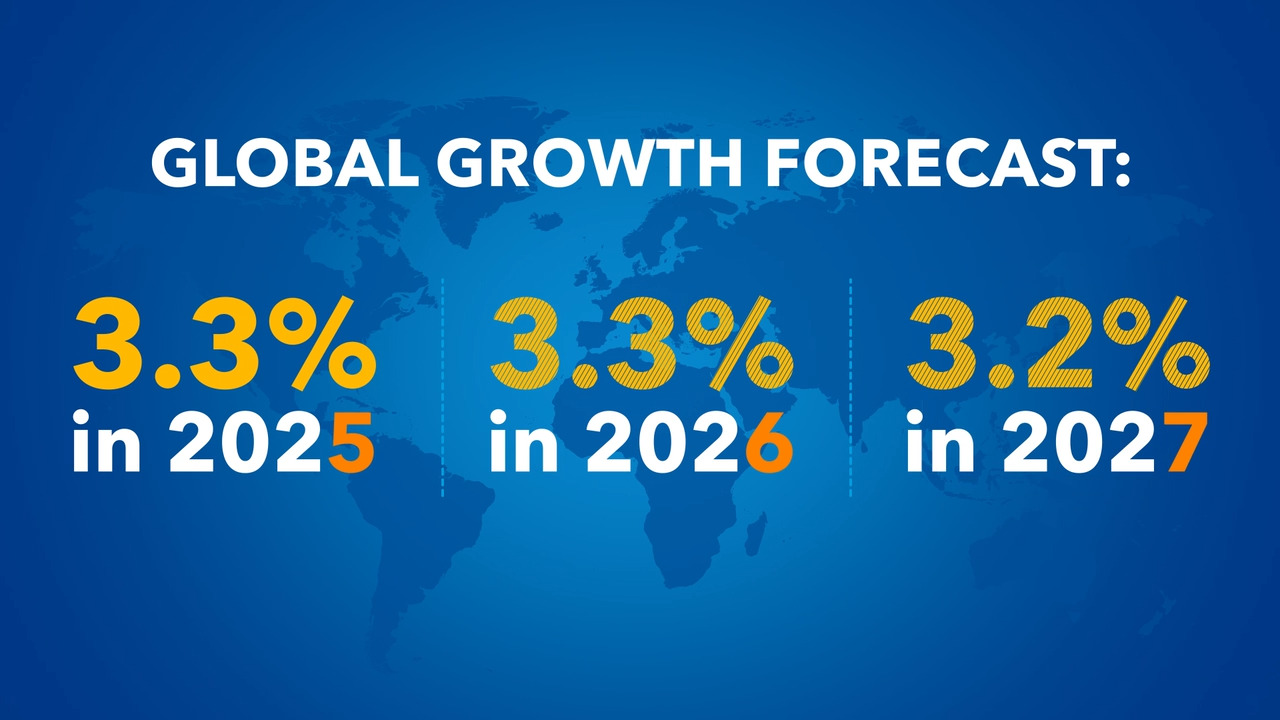
The GCC area is going through a transformative phase concentrated on economic diversification and sustainable advancement. Historically reliant on oil and gas, GCC economies are now aiming to diversify their revenue sources through enthusiastic government-led initiatives like Saudi Vision 2030 and We the UAE 2031 that shift focus from high-risk, vulnerable and/or high-carbon markets and sectors to economies.
Frameworks for Capital Allocation for 2026 Global Markets
A strong driver behind economic diversity and green shift plans in the GCC is the well-documented impact of climate modification in the region being experienced now and in the future. The World Bank approximates that as much as 100 million individuals in the Middle East, consisting of the GCC, will suffer from water stress by 2025, with parts of the area expected to end up being uninhabitable by the end of the century due to water deficiency and high temperature levels.

Latest Posts
Why International Investment Flows Surge in 2026?
Why Foreign Capital Inflows Change in 2026?
Key Stock Market Trends Across the GCC