All Categories
Featured
Table of Contents
All GCC countries face the obstacle of ensuring future work for nationals while maintaining dependence on foreign workers to fill specific functions, the urgency of this problem varies across national contexts given that GCC nations' demographics and top priority locations diverge substantially. For nations that rely greatly on foreign labour, there is a risk that shift processes will exacerbate poor working conditions and increase workers' vulnerability to exploitative practices.
Economic diversity and related green shift plans create sufficient opportunities but likewise enhanced duties for business operating in the GCC area. Throughout this procedure, both governments and services have a responsibility to regard and advance employee welfare and account for future labour needs through, for example, ensuring decent working conditions and investing in filling future abilities gaps.
Whereas governments are needed to supply robust regulatory structures and enforcement systems in line with international requirements, businesses have a duty to regard worldwide acknowledged human rights and labour requirements in line with the UN Guiding Concepts on Company and Human Rights. Services can also utilize their utilize to guarantee that federal governments and partners reinforce policies and accountability mechanisms, providing an environment conducive to responsible company practices.

Expecting this risk and structure capability around how to resolve this issue within the GCC context will be crucial to promoting responsible company in the region.
For decades, hydrocarbon profits shaped the political economy of the Gulf Cooperation Council (GCC). In 2010, oil and gas accounted for more than 70% of federal government incomes throughout many GCC states. Today, that figure is gradually decreasing not due to the fact that oil has actually become irrelevant, however due to the fact that diversification has moved from ambition to execution, Invest-Gate reports.
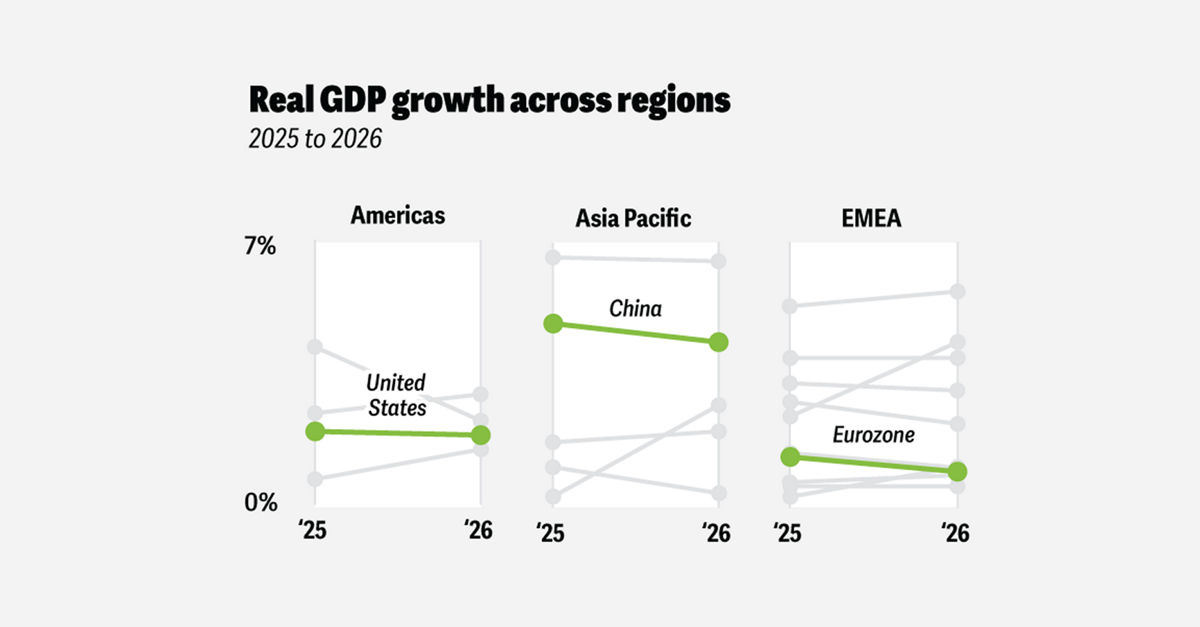
Vital Factors Influencing Gulf Economic Forecasts by 2026
The UAE's non oil sector expanded by more than 6% in 2023. It is a structural change redefining financial impact and capital allowance in the area.
Oman and Bahrain have pursued financial consolidation and logistics driven diversity. These strategies work as financial operating systems collaborating policy, capital release, facilities development, and foreign financial investment attraction.
The UAE brought in more than $22 billion in FDI inflows in 2023, ranking amongst the top global recipients. QatarEnergy dedicated over $30 billion to LNG growth while parallel financial investments streamed into innovation and sovereign portfolios abroad. Infrastructure, tourism, innovation, renewable resource, and logistics are now soaking up capital when concentrated in upstream oil tasks.
Will Gulf Industrial Success Outpace Global Benchmarks?
Diversity is not only financial it is geopolitical. Financial power is significantly measured by: Control over worldwide logistics passages Sovereign wealth fund influence in global markets Technological communities Capability to bring in global talent The UAE has positioned itself as a global financial and logistics hub. Saudi Arabia is leveraging scale and domestic demand to improve regional supply chains.
As non-oil sectors expand, financial durability improves. Recover cost oil prices have actually slowly declined in some GCC states due to diversified profits streams, including barrel, corporate taxes, and financial investment earnings. Capital flows within the region are likewise changing. Riyadh is becoming a local headquarters center following Saudi localization guidelines.
Winning the Race for Capital: Strategies for 2026 GCC SuccessSaudi Arabia led the area in IPO continues in 2023-2024, while the UAE continues to control in startup funding and tech ecosystem maturity. This redistribution of economic gravity is gradually recalibrating regional impact.
Creating Sustainable Investment Structures with Arabian Assets
The GCC is not moving "away" from oil it is moving beyond dependence on it. The strategic shift lies in transforming oil wealth into varied economic power.
The change underway is redefining both local hierarchy and international capital combination.
Sweeping modifications are pertaining to nations in the Gulf Cooperation Council (GCC). The United Arab Emirates (UAE) and the Kingdom of Saudi Arabia (KSA), long reliant on hydrocarbon exports, are charting a vibrant brand-new course towards financial diversification. Regional production and production are at the forefront of the shift, together with blossoming sectors, consisting of tourism, retail, and technology.

Latest Posts
Why International Investment Flows Surge in 2026?
Why Foreign Capital Inflows Change in 2026?
Key Stock Market Trends Across the GCC